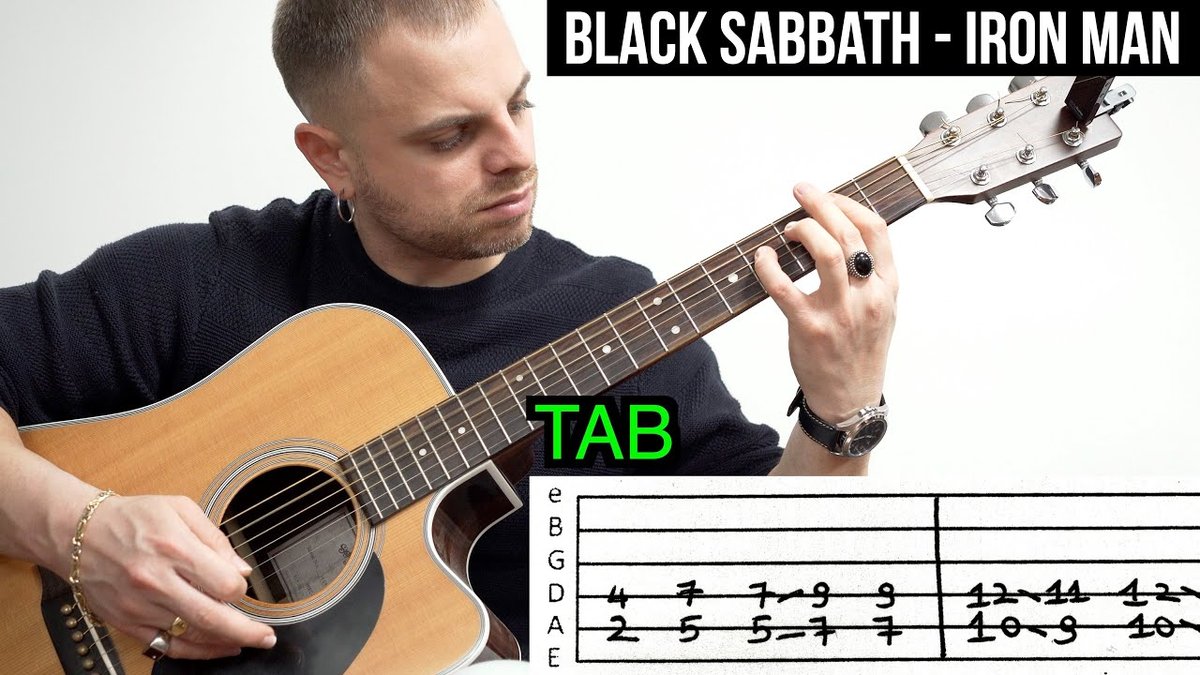
If you've ever dreamt of channeling the raw power and timeless heavy metal grit of Black Sabbath, mastering the "Iron Man" guitar solo is a rite of passage. Dive into this guide on Iron Man Guitar Solo Tabs & Lessons, and you'll not only learn Iommi's iconic riffs but also unlock fundamental techniques that define heavy guitar playing. This isn't just about mimicry; it's about understanding the language of doom.
At a Glance: What You'll Master
- The Iommi Sound: Understand the core elements of Tony Iommi's groundbreaking tone and playing style.
- Essential Techniques: Break down power chords, palm muting, bends, vibrato, slides, and more.
- Section-by-Section Mastery: Learn the intro, main riff, and solo, piece by piece.
- Practical Practice Plan: Develop a structured approach to tackle challenging sections effectively.
- Beyond "Iron Man": See how these skills translate to a wide range of rock and metal genres.
The Thunderous Legacy of "Iron Man": Why It Still Rules
"Iron Man" isn't just a song; it's a cornerstone of heavy metal, a visceral experience forged in the crucible of 1970 by Black Sabbath. Released on their seminal album Paranoid, this track solidified Tony Iommi's legendary status and etched its dark, menacing riffs into the annals of music history. For any aspiring guitarist, especially those venturing into rock and metal, understanding the architecture of "Iron Man" is like decoding an ancient blueprint of sonic power.
Iommi’s influence extends far beyond this single track. He’s the architect of heavy metal guitar, crafting detuned, blues-infused riffs with a unique blend of brutality and melodicism, all while battling a debilitating hand injury. His innovative use of power chords, palm muting, and signature bends created a template that countless bands would follow. This isn't just about playing notes; it's about capturing a mood, a feeling, a thunderous energy that reverberates to this day. Getting your hands on comprehensive Iron Man guitar tabs is your first step to unlocking this legendary sound.
Before You Plug In: Dialing in That Doom Tone
Replicating "Iron Man" effectively starts before you even hit a note. Your setup plays a crucial role in capturing that unmistakable Black Sabbath vibe.
Tuning Down for Darkness
Tony Iommi famously detuned his guitar to make playing easier due to his injured fingertips, and this lower tuning became a hallmark of Black Sabbath's sound.
- Standard Tuning (E Standard): E-A-D-G-B-E
- "Iron Man" Tuning (C# Standard / Drop C#): C#-F#-B-E-G#-C#
This means every string is tuned down 1.5 steps (three semitones) from standard E. For the low E string, this makes it C#. Some sources may refer to this as Drop C#, indicating the lowest string is dropped an additional step, but for "Iron Man," it's consistently down 1.5 steps across all strings. This lower tension makes bends easier and gives the riffs their characteristic dark, heavy resonance.
Pro Tip: If you're new to detuning, ensure your guitar's intonation is checked, especially if you plan to keep it in this tuning for extended periods. Heavier gauge strings (e.g., .011 or .012 sets) can also help maintain string tension and clarity at lower tunings.
Amp Settings: The Voice of Doom
Iommi's tone is thick, raw, and powerful, often attributed to his Laney amps cranked up to oblivion. While you might not have a vintage stack, you can get surprisingly close with a solid amp and a few tweaks.
- Gain: You'll want significant gain, but avoid excessive, scooped modern metal distortion. Iommi's tone has a "hairy" or "fuzzy" quality rather than pure saturation. Start around 6-7 on your gain knob and adjust to taste.
- Bass: Boost the bass to give your sound a robust foundation. This is critical for the low, rumbling power chords.
- Mids: Don't scoop your mids! A common mistake in metal is to cut mids, but Iommi's tone has a strong mid-range presence that helps it cut through the mix and provides warmth. Keep them slightly above neutral.
- Treble: Adjust to add clarity without becoming harsh. You want enough bite for the solo, but not so much that the riffs sound thin.
- Reverb/Delay: A touch of subtle reverb can add spaciousness, but don't overdo it. "Iron Man" is about direct, in-your-face power.
Guitar & Pick Choice
- Humbuckers: A guitar with humbucking pickups (like a Gibson SG, Iommi's preferred axe) is ideal. They offer higher output and a thicker tone compared to single coils, which is essential for heavy riffs.
- Heavy Pick: A thicker pick (1.0mm or heavier) provides better attack and control, crucial for those powerful palm-muted riffs and precise soloing.
Deconstructing the Riff: The Backbone of "Iron Man"
The sheer genius of "Iron Man" lies in its simplicity and effectiveness. It's built on a few core sections, each contributing to its undeniable power.
The Iconic Intro: Slow and Deliberate
The song opens with a slow, ominous, single-note riff, often mistaken for bass, but it's Iommi on guitar. It's a testament to the power of less-is-more.
C#|---------------------------------|
G#|---------------------------------|
E |---------------------------------|
B |---------------------------------|
F#|---------------------------------|
C#|-0-0-0-0-0-0-0-0-0-0-0-0-0-0-0-0-| (Open C# string)
This is repeated four times before the main riff kicks in. Focus on a very clear, slightly muted attack. It’s a rhythmic pulse that sets the stage.
The Main Power Chord Riff: A Masterclass in Heavy
This is where the magic truly begins. The main "Iron Man" riff is a clinic in heavy guitar, built predominantly on power chords, slides, and palm muting.
Let's break down the core techniques at play:
Power Chords: The Building Blocks
Power chords are fundamental to rock and metal. They're two-note or three-note chords (root and fifth, sometimes with the octave) that sound thick and powerful when distorted. For "Iron Man," you'll primarily use two-finger shapes. Understanding essential power chord shapes is key.
Example (A Power Chord on the low C# string, in C# standard tuning):
C#|-----|
G#|-----|
E |-----|
B |-----|
F#|-2---| (Ring finger)
C#|-0---| (Index finger)
The "Iron Man" riff heavily utilizes power chords on the C# and F# strings, often played with slides.
Palm Muting: Punch and Percussion
Palm muting gives the main riff its characteristic chugging, percussive quality. It involves resting the edge of your picking hand on the guitar strings, near the bridge, to dampen the notes as you pick them. This technique is vital for rhythm guitar in heavy music. To get it right, you'll need to develop a feel for exactly where on the strings to rest your hand to achieve the desired level of muting. Too far from the bridge, and the notes become too dull; too close, and they ring out too much. Developing control here is crucial for mastering palm muting in metal.
Sliding Power Chords: Fluid Transitions
The main riff involves a signature slide from the 3rd fret to the 5th fret on the C# string, and then back. This slide gives the riff its dynamic, almost vocal-like quality.
How to Execute:
- Form your power chord at the starting fret (e.g., 3rd fret C# string).
- Strike the chord.
- Immediately, while the chord is still ringing, slide your fingers up (or down) the fretboard to the target fret (e.g., 5th fret).
- Maintain pressure throughout the slide to ensure the notes continue to sound.
It’s often challenging for beginners to maintain even pressure and a smooth sound during the slide, but practice makes perfect.
Unlocking Iommi's Solo: Techniques to Master
The "Iron Man" solo is a concise, blues-infused masterpiece that perfectly encapsulates Iommi's style. It's not about shredding at breakneck speed; it's about powerful note choice, expressive bending, and deliberate phrasing.
The Scale: Blues in C# Minor
The solo is predominantly played in the C# minor pentatonic scale, with the addition of the "blue note" (a flattened fifth), giving it that classic bluesy edge.
C# Minor Pentatonic (example position, low C# string):
C#|-------------------|
G#|-------------------|
E |---0---3---5-------|
B |---0---2---5-------|
F#|---0---2---4-------|
C#|-0---2---4---------|
Understanding these scale shapes is your roadmap for navigating the solo and eventually improvising in the style.
Essential Soloing Techniques at Play:
Iommi employs a range of expressive techniques to give the "Iron Man" solo its character. Mastering these will serve you well beyond this one song.
String Bending: Raw Emotion
Iommi is a master of bluesy string bends, adding emotion and a vocal-like quality to his solos. In "Iron Man," you'll encounter full-step bends (e.g., bending a note up to sound like the note two frets higher) and half-step bends. To nail these:
- Finger Strength: Use multiple fingers (e.g., your ring finger for the bend, supported by your middle and index fingers) for strength and control.
- Pitch Accuracy: Practice bending to the exact target pitch. Use a tuner or your ear to ensure you're hitting the right note. For advanced bending techniques, consistency is key.
- Listen to Iommi: Pay close attention to how he approaches bends – they are often deliberate and sustained, not rushed.
Vibrato: Adding Sustain and Sizzle
Vibrato is the subtle fluctuation of a note's pitch, either by wiggling your finger on the string or using a tremolo bar. Iommi's vibrato is often wide and expressive, giving his sustained notes a rich, throbbing quality.
- Consistent Motion: Develop a rhythmic, controlled vibrato.
- Finger Strength: As with bends, good finger strength helps sustain the vibrato.
- When to Apply: Vibrato is typically used on longer, sustained notes in the solo to add expression and make them sing. Learning to add expressive vibrato dramatically improves solo fluidity.
Slides: Smooth Transitions
Beyond the main riff, slides are used in the solo to connect phrases smoothly and add melodic flow. These are often quicker and more subtle than the power chord slides in the main riff.
Example: Sliding into a note from below or above, or sliding between two notes in a phrase.
Alternate Picking: Speed and Precision
While "Iron Man" isn't a shred-fest, there are moments of faster note passages where alternate picking (alternating downstrokes and upstrokes) is essential. This technique allows for greater speed and precision, particularly when moving across strings. Drills to speed up your alternate picking involve practicing scale runs and arpeggios with a metronome.
Hammer-ons and Pull-offs: Legato Flow
These techniques create a smooth, fluid "legato" sound by connecting notes without picking each one.
- Hammer-on: Fret a note, pick it, then press down another finger on a higher fret on the same string without picking again, causing the second note to sound.
- Pull-off: Fret two notes on the same string (e.g., index finger on a lower fret, ring finger on a higher fret). Pick the higher note, then "pull off" your ring finger to sound the lower note.
Iommi uses these sparingly but effectively to add a sense of effortless movement to his melodic lines.
String Rake: A Subtle Touch
While not as prominent as in some other metal songs, Iommi might occasionally use a subtle string rake to add a percussive attack before a key note, especially if he's transitioning from a muted string section to a melodic one. This involves lightly muting adjacent strings and quickly dragging the pick across them before striking the intended note, adding a rhythmic "shush" sound.
Breaking Down the Solo: Phrase by Phrase
The "Iron Man" solo is short, sweet, and to the point. Let's look at its key characteristics:
- Opening Statement: Often begins with a strong, sustained bend, establishing the bluesy feel immediately.
- Melodic Development: Iommi uses the C# minor pentatonic scale to create memorable, singable phrases. Listen for how he varies his rhythm and attack.
- Economy of Notes: There are no wasted notes. Every bend, every slide, every vibrato serves a purpose.
- Phasing and Pauses: The spaces between notes are as important as the notes themselves, adding to the solo's dramatic impact.
Rather than providing exact tabs here (which are widely available and can be complex to render in text), focus on the feel and technique of each section.
- The Opening Bend: Usually a full-step bend on the G# string, sustained with vibrato. This sets the tone.
- Ascending Phrase: A quick run up the pentatonic scale, often using hammer-ons and pull-offs for fluidity.
- Signature Lick: A memorable, bluesy lick, often incorporating a quick bend and release.
- Descending Conclusion: A series of notes that bring the solo to a satisfying resolution, often with a final, strong vibrato.
Your Action: Find accurate tabs (like those linked previously in this article) and work through the solo slowly, phrase by phrase, isolating each bend, slide, and pick stroke.
Common Pitfalls and How to Avoid Them
Learning "Iron Man" can be frustrating if you don't approach it systematically. Watch out for these common issues:
- Inconsistent Palm Muting: If your palm muting isn't consistent, your main riff will sound sloppy, losing its punch. Practice muting and picking individual notes slowly.
- Sloppy Slides: Maintaining pressure throughout slides is crucial. If your notes die out mid-slide, your transitions will sound choppy.
- Weak Bends & Vibrato: Half-hearted bends that don't reach the target pitch or weak vibrato will strip the solo of its emotional impact. Build finger strength and focus on pitch accuracy.
- Ignoring the Rhythm: "Iron Man" is all about groove. Don't just play the notes; feel the rhythm. Use a metronome from day one.
- Rushing the Tempo: This isn't a race. Iommi's playing is deliberate. Start at a snail's pace and gradually increase the tempo.
Your Practice Blueprint: From Novice to Doom Master
Transforming from a hopeful beginner to a confident player of "Iron Man" requires discipline. Here's how to structure your practice:
- Start with the Riff: The main riff is the foundation. Master the power chords, slides, and palm muting at a very slow tempo. Focus on consistency.
- Metronome is Your Best Friend: Use a metronome for every practice session. Start incredibly slow (e.g., 60 BPM) and gradually increase the tempo as your precision improves.
- Break it Down: Don't try to learn the entire song or solo at once. Break it into small, manageable phrases (e.g., 2-4 bars at a time). Master each phrase before connecting them.
- Isolate Techniques: Dedicate specific practice time to individual techniques. For example, spend 5-10 minutes just practicing string bends, then 5-10 minutes on palm muting.
- Listen Actively: Listen to the original song constantly. Pay attention to Iommi's nuances – his attack, his dynamics, how he lets notes breathe.
- Record Yourself: It's often painful but incredibly insightful. Recording your practice sessions allows you to objectively hear your mistakes and areas for improvement.
- Consistency Over Duration: Short, focused practice sessions (e.g., 30 minutes daily) are far more effective than one long, infrequent session.
- Patience and Persistence: You won't master it overnight. There will be frustrating moments. Celebrate small victories and keep pushing forward.
Beyond "Iron Man": What You'll Learn for Your Guitar Journey
Mastering "Iron Man" isn't just about adding a classic to your repertoire. The techniques you develop here are foundational for nearly all heavy rock and metal guitar playing.
- Foundation for Metal: You'll build a strong rhythm guitar style, essential for genres from classic rock to thrash metal.
- Enhanced Soloing: The focus on expressive bending, vibrato, and blues scales will significantly improve your lead playing, making your solos more melodic and impactful.
- Speed and Fluidity: Consistent practice with alternate picking, hammer-ons, and pull-offs will naturally boost your speed and make your playing feel more effortless.
- Versatility: These core techniques translate across countless songs. Once you've got them down, you'll find other challenging riffs and solos much more approachable.
- Understanding Iommi's Genius: You'll gain a deeper appreciation for Tony Iommi's groundbreaking contributions to guitar playing and how he crafted such iconic, enduring music.
Your Next Steps to Guitar Immortality
The road to becoming a master of Iommi's iconic riffs begins now. Arm yourself with accurate tabs, a metronome, and a healthy dose of patience. Dive into the world of power chords, master the subtle art of palm muting, and pour your soul into those bluesy bends. Each practice session brings you closer to embodying the true spirit of heavy metal.
Don't just play the notes; understand the language. Feel the power. Let the thunder of "Iron Man" resonate through your fingers, and you'll not only pay homage to a legend but also forge your own path as a formidable guitarist. Now, pick up that axe and make some noise!