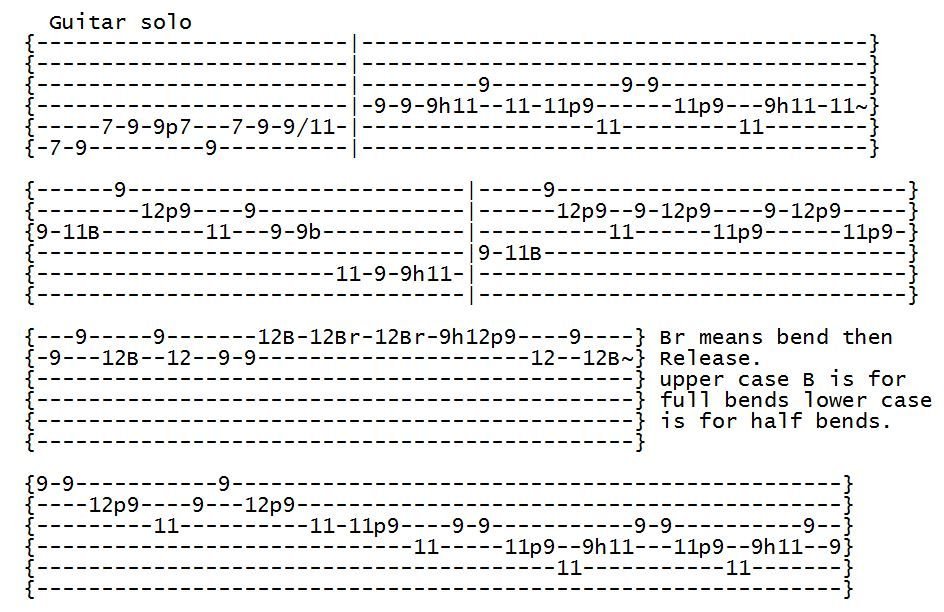
The iconic opening riff of Black Sabbath's "Iron Man" isn't just a heavy metal staple; it's a rite of passage for any aspiring rock guitarist. If you've been yearning to master those slow, crushing notes and electrifying solos, you're in the right place. Unlocking the Official Iron Man Guitar Tabs allows you to go beyond approximations, diving deep into the exact phrasings and techniques that made this song immortal.
This isn't just a list of numbers on a fretboard. We're going to break down every essential component, from the earth-shattering main riff to Tony Iommi's legendary solo work, ensuring you not only play the notes but understand the soul behind them.
At a Glance: Your Roadmap to "Iron Man" Mastery
- Authentic Tabs: Learn the definitive tablature for "Iron Man" by Black Sabbath, straight from the source.
- Master Key Techniques: Understand bends (B), hammer-ons (h), pull-offs (p), slides (SL), and the unique prebend & release (R) essential for this track.
- Song Structure Decoded: Follow the entire song flow, from the chilling intro to the final, frantic riffs, with lyrical cues to guide you.
- Solo Breakdown: Tackle "Ironman Solo #1" from the Paranoid album with detailed guidance on its execution.
- Actionable Tips: Get practical advice on dynamics, timing, and practice strategies to bring Iommi's legendary guitar work to life.
The Relentless Force: Why "Iron Man" Still Matters
Long before superheroes dominated cinema, Black Sabbath's "Iron Man" painted a grim, powerful picture with sound. Released in 1970 on their seminal album Paranoid, this track isn't just a song; it's a narrative, a sonic journey through despair, vengeance, and unstoppable might. Tony Iommi's guitar work, born from necessity due to a factory accident that severed his fingertips, created a heavier, more deliberate style that became the blueprint for countless metal bands. His slow, ponderous riffs, infused with a distinct gloom and power, were revolutionary.
Learning "Iron Man" isn't just about playing another song; it's about connecting with the roots of heavy metal, understanding the language of distortion and sustain, and developing the precision needed to articulate those colossal notes. It teaches you rhythm, dynamics, and how to command attention with just a few well-placed, weighty strikes.
Demystifying Guitar Tablature: Your Secret Language
Before we plunge into the actual riffs, let's quickly ensure we're all speaking the same language. Guitar tablature (tab) is a visual representation of how to play notes on a guitar, much simpler than traditional sheet music for many guitarists.
Each horizontal line represents a string:
e|-----------------| (High E string)
B|-----------------|
G|-----------------|
D|-----------------|
A|-----------------|
E|-----------------| (Low E string)
Numbers on these lines tell you which fret to press down. For example, E|-3-| means play the 3rd fret on the Low E string.
But "Iron Man" employs some specific techniques that have their own symbols. Here's a quick cheat sheet for what you'll encounter in the official tabs:
- p: Pull-off – Fret a note, then pull your finger off the string to sound a lower note on the same string (often an open string or a pre-fretted note).
- h: Hammer-on – Fret a note, then bring another finger down sharply on a higher fret on the same string to sound that note without picking again.
- R: Release – This is a crucial "Iron Man" specific technique. It means you prebend a whole step (bend the string up before you pick it) and then release it back to the original note's pitch. It creates a signature, sludgy sound. We'll explore this for the Intro and Riff 7.
- ^: (in solo tab) – This symbol, typically found above a fret number, indicates an action like a bend, pull-off, or hammer-on. The specific action is usually contextual or explicitly stated if it's not a standard bend.
- SL: Slide – Pick a note, then slide your finger up or down the fretboard to another note without picking again.
- B: Bend – Pick a note and then push or pull the string across the fretboard to raise its pitch. Often followed by the target pitch in parentheses (e.g.,
12b(14)means bend the 12th fret to the pitch of the 14th).
Remember, blank columns in some riff examples (like Riff 1) aren't timing indicators; they're just there to visually separate tab numbers, helping with readability. Don't count them as rests or beats.
The Colossal Opening: Intro and Riff 7's Signature Sound
The first notes of "Iron Man" are instantly recognizable, a slow, menacing crawl that sets the stage for the entire saga. This intro, and later Riff 7, share a critical, unique technique:
Actionable Insight: The Prebend and Release
For the Intro and Riff 7, you'll fret the low E string on the 1st fret, prebend a whole step, and then release it.
What does this mean practically?
- Place your finger on the 1st fret of the Low E string.
- Before you pick the string, push the string upwards (or pull downwards, depending on your guitar/hand position) to bend it up to the pitch of the 3rd fret. This is the "prebend."
- Now, pick the string while maintaining that bent position.
- Immediately release the bend, letting the string return to its unbent 1st-fret pitch.
This creates that signature, drooping, heavy sound. It's not just a bend; it's an intentional release from a pre-set bend, making it sound weighty and deliberate.
Let's look at an illustrative snippet for the Intro, focusing on this technique:
Intro (illustrative snippet)
e|-----------------|
B|-----------------|
G|-----------------|
D|-----------------|
A|-----------------|
E|-1R------3---1R--|
(Prebend 1st fret to 3rd fret pitch, then release)
TheRabove the 1 indicates that prebend-and-release action. Practice getting that smooth, heavy sag.
Dissecting the Riffs: A Journey Through the Song Structure
"Iron Man" is a masterclass in riff construction and variation. Each section builds upon the last, guiding the listener through the song's narrative. We'll walk through the structure as outlined in the official tabs, providing illustrative snippets and context.
Riff 1 (The Main Powerhouse)
This is the rhythmic backbone of the verse sections. It often accompanies Riff 2, creating a powerful, driving foundation. While the prompt implies the full tab is provided for other riffs, Riff 1 is the main theme, and its "blank columns" are specifically mentioned for visual separation. Here's a representative example of what Riff 1 might look like, focusing on power chords and heavy palm-muting:
Riff 1 (illustrative snippet - blank columns for visual separation)
e|-----------------|-----------------|
B|-----------------|-----------------|
G|-----------------|-----------------|
D|-----5---7---5---|-----5---7---5---|
A|-----3---5---3---|-----3---5---3---|
E|-3---------------|-3---------------|
(Heavy, palm-muted power chords often define this riff)
Notice the blank columns separating the chord changes. They don't affect timing; they just help clarify the individual notes or chords.
Riff 2 (The Companion Riff)
Riff 2 frequently accompanies Riff 1, adding melodic counterpoint or filling out the texture during the verses.
Riff 2 (illustrative snippet)
e|-----------------|
B|-----------------|
G|-----------------|
D|-----------------|
A|-5-5-3-5---5-3---|
E|-----------------|
Verse 1:
Lyrics: "Has he lost his mind? Can he see or is he blind? Can he walk at all? Or if he moves will he fall?"
Here, Riff 1 X with Riff 2 would play. Focus on the interplay and maintaining a steady, heavy rhythm.
Verse 2:
Lyrics: "Is he 'live or dead? Has he thoughts within his head? We'll just pass him there. Why should we even care?"
Again, Riff 1 with Riff 2 carries the weight of the narrative. The slow pace amplifies the dread.
Riff 3 (Building Tension)
Riff 3 often marks a slight shift in intensity or mood, leading into different sections. Later, it explodes into a "Double Time" section.
Riff 3 (illustrative snippet)
e|-----------------|
B|-----------------|
G|-----------------|
D|-----------------|
A|-5-7-8-7-5-------|
E|-----------8-7-6-|
The Story Continues with Riff 1 X w/ Riff 2:
Lyrics: "He was turned to steel in a great magnetic field Where he traveled time for the future of mankind"
The familiar Riff 1 and 2 return, grounding the listener back in the primary theme as the tragic backstory unfolds.
Riff 4 (The Ominous Transition)
This riff introduces a new, more unsettling feel, perfectly accompanying the lyrics about the Iron Man's isolation.
Riff 4 (illustrative snippet)
e|-----------------|
B|-----------------|
G|-----------------|
D|-7---7---7---5---|
A|-5---5---5---3---|
E|-----------------|
Pre-Chorus 1 (with Riff 4):
Lyrics: "Nobody wants him. He just stares at the world"
The change in riff here underscores the shift in the Iron Man's character, from victim to observer.
Riff 5 (The Vengeful March)
Riff 5 is often paired with Riff 4, but when played alone, it emphasizes the growing menace and the "planning his vengeance" theme.
Riff 5 (illustrative snippet)
e|-----------------|
B|-----------------|
G|-----------------|
D|---5-7-8-7-5-----|
A|---3-5-6-5-3-----|
E|-3-----------6-5-|
Chorus 1 (with Riff 5 w/ Riff 4, then Riff 5 alone):
Lyrics: "Planning his vengeance that he will soon unfold"
This is where the narrative turns, and the riffs reflect that rising threat. The repeated Riff 5 reinforces the idea of unstoppable intent.
The Second Wave of Vengeance:
Verse 3 (Riff 1 X w/ Riff 2):
Lyrics: "Now the time is here for Iron Man to spread fear Vengeance from the grave kills all the people he once saved"
The cyclical nature of the main riff brings us back to the core story, escalating the tension.
Pre-Chorus 2 (with Riff 4):
Lyrics: "Nobody wants him. They just turn their heads"
The ominous Riff 4 returns, reflecting the rejection and isolation.
Chorus 2 (with Riff 5 w/ Riff 4, then Riff 5 alone):
Lyrics: "Nobody helps him. Now he has his revenge"
The build-up to vengeance culminates here, driven by the powerful Riff 5.
Riff 6 (The Speed Demon)
This riff marks a significant dynamic shift, kicking into "Double Time." This means the tempo effectively doubles, or the feel becomes much faster and more urgent, even if the absolute BPM stays the same.
{Double Time} Riff 6 X (illustrative snippet)
e|-----------------|
B|-----------------|
G|-----------------|
D|-7-7-7-7-5-5-5-5-|
A|-5-5-5-5-3-3-3-3-|
E|-----------------|
This is where the song truly accelerates, leading into the first major guitar solo. Pay close attention to your picking hand's stamina and precision here.
Mastering the Solos: Precision and Emotion
Tony Iommi's solos are not about flashy shredding; they're about melodic storytelling, bends that sing, and a raw, almost bluesy feel injected with heavy metal attitude.
Solo 1 (from Paranoid)
This is a quintessential Iommi solo. It's concise, memorable, and full of his signature phrasing. The ^ symbol in the tabs above the fret numbers will guide your bends and other actions.
Let's look at an illustrative snippet for Solo #1, highlighting typical Iommi moves:
Ironman Solo #1 (illustrative snippet)
e|---------------------------------|
B|---------------------------------|
G|---------------------------------|
D|---------------------------------|
A|-7^B--7p5-7---5^B----------------|
E|--------------------8-5-8^B--5---|
^B: Bend up p: Pull-off
When approaching Solo 1, focus on:
- Pitch Accuracy: Ensure your bends hit the target note precisely. Use your ear!
- Vibrato: Iommi's vibrato is wide and expressive. Don't be afraid to dig into the notes.
- Phrasing: Each phrase has a beginning, middle, and end. Listen to how Iommi lets notes sustain and then cuts them off.
- Feel: This solo isn't about speed, but about delivering emotional impact through heavy blues phrasing. Don't rush it.
After Solo 1, the song briefly returns to the driving Riff 6 X but at "Half Time," giving a sense of release and returning to the heavier, slower pace before building again. Then, Riff 5 X reinforces the theme of vengeance.
The Climax: Iron Man Lives Again
Verse 4 (Riff 1 X2 w/ Riff 2):
Lyrics: "Heavy bolts of lead, fills his victims full of dread Running as fast as they can, Iron Man lives again"
The intensity builds with the main riff repeated, creating a sense of inevitability and terror.
Riff 3 {Double Time . Bass enters}:
The tension ramps up further with Riff 3 in double time, now joined by the bass, adding another layer of rhythmic aggression. This is where the band really locks in for the final push.
Riff 7 (The Crushing Release)
Remember the special prebend-and-release technique from the Intro? Riff 7 brings it back, often with even more ferocity, acting as a powerful anchor in this climactic section.
Riff 7 X (illustrative snippet)
e|-----------------|
B|-----------------|
G|-----------------|
D|-----------------|
A|-----------------|
E|-1R------3---1R--|
(Prebend 1st fret to 3rd fret pitch, then release)
Ensure your prebend and release here is as tight and heavy as possible. It’s a core element of the song’s identity.
Riff 8A (The Final Ascent)
As the song approaches its thrilling conclusion, Riff 8A kicks in, often featuring more complex rhythms or a slightly different melodic contour than the earlier power chord work.
Riff 8A X (illustrative snippet)
e|-----------------|
B|-----------------|
G|-----------------|
D|-7-7-5-7---5-7---|
A|-5-5-3-5---3-5---|
E|-----------------|
Solo 2 (The Final Fury)
While less detailed in the provided context than Solo #1, Solo 2 typically mirrors the song's rising intensity. It might be faster, more harmonically dense, or feature even wilder bends and dive bombs if you have a tremolo system. Use what you learned from Solo 1 and apply it with heightened energy.
The song then cycles back through Riff 8A X for another round, solidifying its place in the frantic finale.
Riff 8B (The Last Stand)
Riff 8B often serves as the concluding motif, providing a final, definitive statement. It might resolve the song's tension or leave it hanging ominously.
Riff 8B (illustrative snippet)
e|-----------------|
B|-----------------|
G|-----------------|
D|-5-7-8-7-5-------|
A|-3-5-6-5-3-------|
E|-----------------|
This final riff hammers home the "Iron Man" theme, leaving a lasting impression of power and finality.
Essential Practice Strategies for "Iron Man"
Learning "Iron Man" isn't just about reading the numbers; it's about internalizing its groove and feel. Here’s how to approach it effectively:
- Start Slow, Stay Slow: Use a metronome from day one. Seriously. Begin at a very slow tempo, focusing on perfect timing, clean notes, and accurate technique. Speed will come naturally.
- Section by Section: Don't try to tackle the whole song at once. Master each riff individually before linking them together. Pay special attention to the transitions between riffs.
- Isolate Techniques: Practice bends, hammer-ons, pull-offs, and especially the prebend-and-release (R) technique in isolation until they feel natural and sound consistent.
- Listen Actively: Play along with the original track once you're comfortable with the sections. Pay attention to Iommi's dynamics, subtle palm-muting, and how he lets notes ring or cuts them short. Your ear is your best teacher.
- Focus on Rhythm: "Iron Man" is a rhythmic monster. Ensure your power chords are tight, your chugging is consistent, and your timing is impeccable, especially during the "Double Time" and "Half Time" sections.
- Gear Up (Sensibly): While you don't need Tony Iommi's exact setup, a guitar with humbucking pickups and a decent high-gain amplifier will get you closer to that thick, distorted tone. Don't forget a healthy dose of sustain.
- Mind Your Fingers: Those power chords and sustained bends can be tough on your fretting hand. Take breaks, stretch, and ensure your hand position is ergonomic to prevent strain.
Beyond the Tabs: Embracing the Spirit of Iommi
While these official tabs provide the blueprint, the true magic of "Iron Man" lies in its feel. Tony Iommi's playing is characterized by:
- Weight and Authority: Every note sounds intentional, heavy, and resonant.
- Melodic Power: Even within the heaviest riffs, there's a strong sense of melody and direction.
- The Doom Groove: That signature, slow, almost sludgy rhythm that defined early heavy metal.
Don't just play the notes; embody them. Imagine the story of the Iron Man as you play. Let the slow, crushing riffs convey despair, and the faster sections the rage and vengeance. This emotional connection will elevate your playing far beyond mere technical accuracy.
Your Next Step: Unleash the Iron Man Within
You now have the tools and the map to conquer "Iron Man." These Official Iron Man Guitar Tabs are your gateway to understanding one of heavy metal's most enduring anthems. Remember, consistent practice, a keen ear, and a passion for the music are your greatest assets.
Dive into the riffs, master the solos, and embrace the sheer power of Black Sabbath. There's a whole world of heavy riffs waiting for you to explore. Ready to go deeper? Explore all Iron Man tabs and continue your journey through the monumental landscape of metal guitar. Now go make some noise!