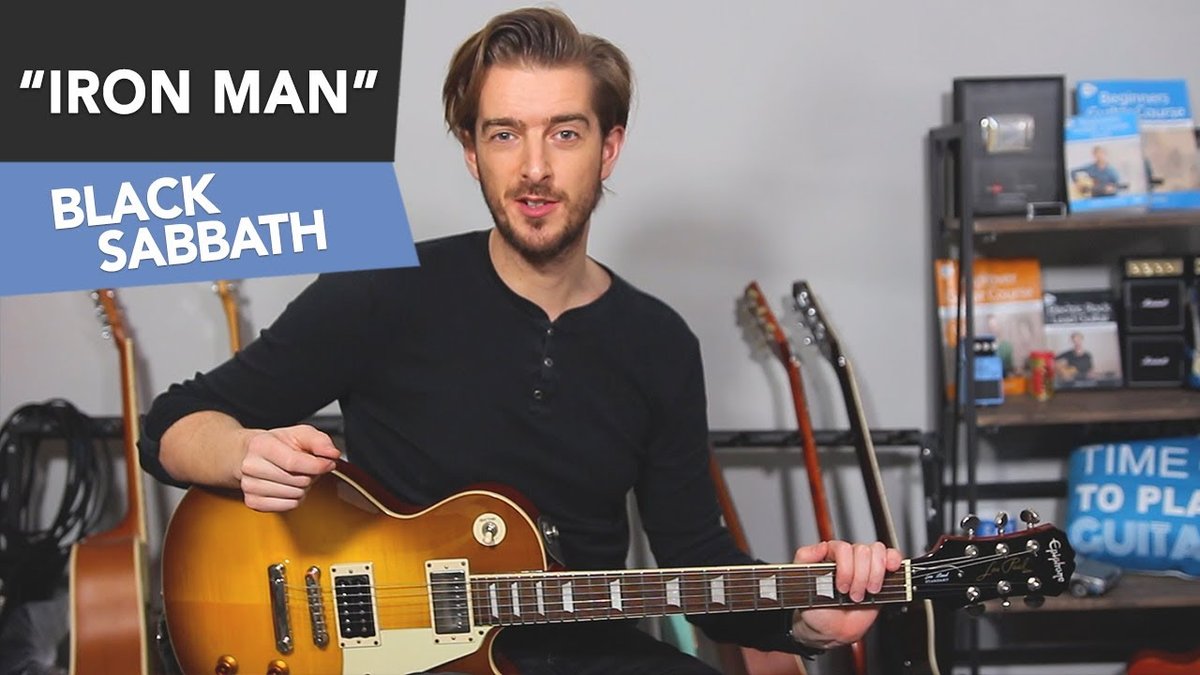
So, you've decided to tackle "Iron Man" on guitar, and you're looking for simplified Iron Man guitar tabs for beginners to finally nail that iconic riff? You've landed in the right spot. Forget sifting through overly complex arrangements or getting frustrated by advanced techniques. This guide is your no-nonsense roadmap to playing one of rock's most recognizable tunes, designed specifically for new guitarists. We'll break down Tony Iommi’s legendary riff into bite-sized, manageable pieces, ensuring you build confidence and get that classic sound ringing out from your amp (or even your unplugged acoustic).
This isn't just about learning notes; it's about understanding the feel, the rhythm, and the sheer power of this Black Sabbath masterpiece, all while keeping it accessible for your current skill level. Get ready to impress your friends, or just yourself, with a riff that has stood the test of time.
At a Glance: Your Quick Start to "Iron Man"
- Master the Intro: Learn the famous "duh-duh-duh-DUH" opening with just a few notes on the low strings.
- Power Up: Discover how to play the main riff using easy-to-form power chords, perfect for beginners.
- Read the Tabs: Get a quick rundown on how to interpret guitar tablature so you can follow along easily.
- Practice Smart: Understand the most effective ways to practice for quick progress and lasting skill.
- Troubleshoot Common Issues: Identify and fix problems like muddy notes or timing struggles.
- Build Confidence: Unlock a classic rock anthem and build a strong foundation for future guitar endeavors.
Why "Iron Man"? The Perfect Beginner Riff with Legendary Status
There are riffs, and then there are riffs. Black Sabbath's "Iron Man" falls firmly into the latter category. From the moment that low, ominous opening note hits, you know exactly what you’re hearing. It’s heavy, it's memorable, and it has an undeniable swagger. For guitarists just starting out, picking a familiar, beloved song can be a massive motivator, and "Iron Man" delivers on all fronts.
Why is this particular riff such a fantastic choice for beginners? Well, it’s surprisingly straightforward at its core. While the original version features some distinctive techniques – like Tony Iommi’s unique bending of the low E string behind the nut, as noted on Ultimate-Guitar.com – the main structure relies on simple power chords and open string notes that are well within a new player’s grasp. By simplifying the more advanced elements, we can focus on the rhythmic drive and the fundamental chord shapes that are crucial for developing your guitar skills. Learning this riff isn't just about playing a song; it's about gaining a fundamental understanding of heavy rock guitar.
Your Essential Gear for Dominating "Iron Man"
You don’t need a custom shop Gibson SG or a wall of Marshall stacks to learn "Iron Man." In fact, you probably already have most of what you need.
- A Guitar: Electric is ideal for that crunchy metal sound, but an acoustic will work just fine for learning the notes and rhythm. Don't worry about tone perfection just yet.
- An Amplifier (for electric guitars): Even a small practice amp will do. Most beginner amps have a "gain" or "distortion" setting. Crank it up a bit to get that signature Iron Man growl.
- A Pick: A medium-to-heavy gauge pick (0.73mm to 1.0mm) will give you better control and a bolder attack, perfect for heavy riffs.
- A Tuner: This is non-negotiable. An out-of-tune guitar sounds bad, no matter how well you play. Clip-on tuners are inexpensive and highly effective. Ensure your guitar is tuned to standard E-A-D-G-B-E.
That’s it! Minimal gear, maximum learning.
Cracking the Code: A Quick Guide to Reading Guitar Tabs
Before we dive into the notes, let’s quickly demystify guitar tablature (tabs). If you're new to this, tabs are essentially a visual representation of your guitar fretboard. They're much simpler to read than traditional musical notation for many beginners.
Here’s the breakdown:
- Six Lines: Each horizontal line represents a string on your guitar. The top line is your high E string, and the bottom line is your low E string.
E (thinnest string)
B
G
D
A
E (thickest string) - Numbers: The numbers on the lines tell you which fret to press down. "0" means play the open string (don't press any fret). A "3" on the low E string means press the 3rd fret on the low E string.
- No Numbers (or Dashes): If there’s a dash (
-) or simply no number on a string, you don’t play that string at that moment. - Stacked Numbers: If numbers are stacked vertically, you play those notes (or chords) at the same time.
It’s that simple! Don't worry about understanding every nuance of reading guitar tabs right now. We'll walk through the "Iron Man" specific examples together. However, if you'd like a more thorough dive into how to read guitar tabs, we have a comprehensive guide ready for you.
The Heart of the Matter: Deconstructing the "Iron Man" Riff
Now for the fun part. We’re going to tackle "Iron Man" in two main sections: the iconic opening motif and the driving main riff. We'll simplify some techniques to make it playable while retaining the original vibe.
Understanding the Original Sound (and How We Simplify)
The very opening of "Iron Man" features a distinct, almost vocal sound – the "I AM IRON MAN" part. In the original recording, Tony Iommi achieves this by bending the low E string behind the nut on his guitar. This creates a very specific pitch shift that's challenging for beginners to replicate accurately and consistently. For our simplified version, we’ll achieve a similar dark, heavy sound using standard fretting, allowing you to focus on clean notes and rhythm without wrestling with an advanced technique.
Simplified Iron Man Riff – Part 1: The Iconic Opening
Let's start with that chilling intro. This section uses only your low E string and your A string, making it very manageable.
E|---------------------|
B|---------------------|
G|---------------------|
D|---------------------|
A|---------------------|
E|--3--2--0----3--2----|
How to Play It:
- Low E, 3rd Fret: Place your index or middle finger on the 3rd fret of the low E string. Pick the string.
- Low E, 2nd Fret: Shift your finger to the 2nd fret of the low E string. Pick it.
- Open Low E: Pick the low E string without pressing any frets (0).
- Repeat: Go back to the 3rd fret, then the 2nd fret on the low E string.
Listen Closely: Notice the rhythm. It’s a slow, deliberate triplet feel: "duh-duh-duh..." followed by a slight pause, then the next "duh-duh..." This is where the famous "I AM IRON MAN" vocal line comes in. Play it slowly, focusing on getting each note to ring out clearly. Use downstrokes for a heavier sound.
After you play theE|--3--2--0----3--2----|part, there’s a moment of silence or feedback in the original. We’ll follow it with the next phrase, which brings in the A string.
E|---------------------------------|
B|---------------------------------|
G|---------------------------------|
D|---------------------------------|
A|-------5--4--2---------5--4------|
E|--3--2----------3--2-------------|
How to Play It (combining with the first part): - Play
E|--3--2--0----3--2----|as described above. - Immediately after the last
E|--2--, move your finger to the A string, 5th fret. Pick it. - Then, A string, 4th fret.
- Then, A string, 2nd fret.
- Go back to the low E string, 3rd fret.
- Then, low E string, 2nd fret.
- Finally, back to the A string, 5th fret, then 4th fret.
Putting Intro Part 1 Together (Full TAB):
E|---------------------------------|
B|---------------------------------|
G|---------------------------------|
D|---------------------------------|
A|-------5--4--2---------5--4------|
E|--3--2--0-------3--2-------------|
Note: TheE|--0--here is played after theE|--2--and right before theA|--5--as a quick transition.
Practice this section over and over until it feels smooth and the rhythm is consistent. Don't rush!
Simplified Iron Man Riff – Part 2: The Main Groove
The main body of the "Iron Man" riff is built around power chords. These are fantastic for beginners because they're relatively easy to form, sound full and powerful (hence the name), and are used in countless rock and metal songs. If you're looking to dive deeper into mastering power chords, we have a dedicated resource for you.
A power chord uses just two or three notes: the root, the fifth, and sometimes an octave of the root. For our purposes, we'll mostly use the two-note version, which is easiest to fret.
Basic Power Chord Shape (Root on Low E string):
Place your index finger on the desired fret of the low E string.
Place your ring finger two frets higher on the A string.
Strum just these two strings.
Let's use an G5 power chord (3rd fret on low E) as an example:
E|-------|
B|-------|
G|-------|
D|-------|
A|---5---| (Ring finger)
E|---3---| (Index finger)
The main "Iron Man" riff uses variations of this shape. The tempo picks up here, so get ready to groove!
E|---------------------------------------------------------|
B|---------------------------------------------------------|
G|---------------------------------------------------------|
D|---------------------------------------------------------|
A|-------5---5-5---5-5---5---5-5---5-5---5-----------------|
E|--3----3---3-3---3-3---3---3-3---3-3---3---5---6---5-----|
How to Play It:
- G5 Power Chord (E-3, A-5): Start with a downstroke on this G5 chord.
- Palm Muting: Immediately after the first chord, slightly lift your palm and rest it gently on the strings near the bridge. This creates a "chugging", muted sound. Pick the G5 chord again rapidly (
3-3). Release the palm mute slightly for the next3. Then repeat the palm-muted3-3. This pattern gives it the classic metal feel. - Walk-up: After the G5 chords, you move to single notes on the low E string: 5th fret, then 6th fret, then back to 5th fret. These are quick transitional notes. Use downstrokes.
Full Main Riff Section:
The riff alternates between the G5 power chord and a C5 power chord (rooted on the A string, 3rd fret).
C5 Power Chord Shape (Root on A string):
Place your index finger on the 3rd fret of the A string.
Place your ring finger two frets higher on the D string (5th fret).
Strum just these two strings (A and D).
E|---------------------------------------------------------|
B|---------------------------------------------------------|
G|---------------------------------------------------------|
D|-------5---5-5---5-5---5---5-5---5-5---5-----------------| (D string)
A|--3----3---3-3---3-3---3---3-3---3-3---3---5---6---5-----| (A string)
E|---------------------------------------------------------|
Now, let's combine these two parts into the full main riff:
E|-----------------------------------------------------------------|
B|-----------------------------------------------------------------|
G|-----------------------------------------------------------------|
D|-----------------------------------------------------------------|
A|-------5---5-5---5-5---5---5-5---5-5---5-------------------------|
E|--3----3---3-3---3-3---3---3-3---3-3---3---5---6---5-------------|
E|-----------------------------------------------------------------|
B|-----------------------------------------------------------------|
G|-----------------------------------------------------------------|
D|-------5---5-5---5-5---5---5-5---5-5---5-------------------------|
A|--3----3---3-3---3-3---3---3-3---3-3---3---5---6---5-------------|
E|-----------------------------------------------------------------|
This sequence repeats throughout the verses. The key here is the rhythm: a driving "chug-chug-chug" with palm muting.
Putting It All Together: Your First Full Section
Let’s combine the intro and the first cycle of the main riff. Remember to play the intro slowly and deliberately, then transition to the faster, chugging main riff.
(Intro)
E|---------------------------------|
B|---------------------------------|
G|---------------------------------|
D|---------------------------------|
A|-------5--4--2---------5--4------|
E|--3--2--0-------3--2-------------|
(Main Riff - repeat 2x for this section)
E|-----------------------------------------------------------------|
B|-----------------------------------------------------------------|
G|-----------------------------------------------------------------|
D|-----------------------------------------------------------------|
A|-------5---5-5---5-5---5---5-5---5-5---5-------------------------|
E|--3----3---3-3---3-3---3---3-3---3-3---3---5---6---5-------------|
E|-----------------------------------------------------------------|
B|-----------------------------------------------------------------|
G|-----------------------------------------------------------------|
D|-------5---5-5---5-5---5---5-5---5-5---5-------------------------|
A|--3----3---3-3---3-3---3---3-3---3-3---3---5---6---5-------------|
E|-----------------------------------------------------------------|
Practice playing the intro, pausing briefly like in the song, then launching into the main riff. Focus on a smooth transition and maintaining the distinct feel of each part.
Beyond the Basic Riff: Adding Some "Metal" Flavor (Optional Next Steps)
Once you’ve got the core simplified Iron Man riff down, you might want to start making it sound a bit more "authentic." These are optional steps but will add significant depth to your playing. For a deeper dive into essential beginner guitar techniques that can elevate your sound, check out our guide.
Power Chords Revisited: Adding the Octave
Many power chords in rock and metal aren't just two notes; they include an octave of the root note. This makes them sound even fuller.
Three-Note Power Chord Shape (Root on Low E string):
Place your index finger on the desired fret of the low E string.
Place your ring finger two frets higher on the A string.
Place your pinky finger directly below your ring finger, on the same fret, on the D string.
Mute the high E, B, and G strings with the underside of your index finger or by simply not strumming them.
Example (G5):
E|-------|
B|-------|
G|-------|
D|---5---| (Pinky finger)
A|---5---| (Ring finger)
E|---3---| (Index finger)
Try applying this thicker power chord sound to the main riff. It adds a wall of sound that really enhances the "metal" feel.
Palm Muting for that Chugging Sound
We touched on this earlier, but let's refine it. Palm muting is crucial for heavy riffs.
How to do it: Lightly rest the fleshy part of your picking hand’s palm on the strings right next to the bridge of your guitar. Don't press too hard, or you'll completely deaden the sound. Experiment with the pressure and position until you get a tight, "chugging" sound that still has some tone. You want it to sound like "chug-chug-chug," not "thud-thud-thud." Practice this specifically on the rapid, repeated power chords in the main "Iron Man" riff.
Vibrato and Bends (Simplified)
While we're simplifying Tony Iommi’s behind-the-nut bend, you can still add some expression:
- Vibrato: On sustained notes (like the open E in the intro, or the held power chords), try wiggling your fretting finger slightly up and down or side to side. This creates a subtle wavering in pitch that adds character.
- Small Bends: You can try very slight bends on some of the notes. Instead of a full-step bend, just a tiny quarter-step bend (pushing the string up a little) can give it a bluesy, expressive touch. For beginners, focus on consistency over extreme bends.
Practice Makes Perfect: Your "Iron Man" Workout Routine
Learning a riff, especially for beginners, is all about smart, consistent practice. Don't just noodle aimlessly. Follow a routine:
- Warm-Ups (5 minutes): Light stretching, then some simple finger exercises like chromatic runs up and down the neck. This prevents injury and gets your fingers limber.
- Slow and Deliberate (10-15 minutes): Play the "Iron Man" riff at a painfully slow tempo. Focus on clean notes, accurate fretting, and consistent rhythm. If you make a mistake, don't just keep going; go back a few notes and fix it.
- Use a Metronome (10-15 minutes): This is your best friend for developing solid timing. Start at a very slow BPM (e.g., 60-80 BPM). Once you can play it perfectly at that speed, gradually increase the tempo by 5 BPM. Only move up when you can play it flawlessly at the current speed.
- Practice in Sections (10 minutes): Don't try to play the whole song perfectly from day one. Focus on mastering the intro riff by itself, then the main power chord riff by itself. Once each section is solid, then work on combining them.
- Consistency is Key: Short, daily practice sessions (30-45 minutes) are far more effective than one marathon session once a week. Even 15 minutes a day will yield incredible results over time. Building an effective guitar practice routine is essential for long-term progress.
Common Pitfalls and How to Avoid Them
Even with simplified tabs, new guitarists can hit roadblocks. Here’s how to navigate them:
- Rushing the Tempo: The most common mistake. You want to play it fast, but your fingers aren't ready. This leads to sloppy playing and frustration. Remember to use that metronome and start slow. Speed comes naturally after accuracy.
- Ignoring Fundamentals: Things like proper finger placement, consistent picking, and clear note articulation are crucial. Don't sacrifice these for speed.
- Bad Posture/Hand Position: Slouching or holding the guitar awkwardly can lead to discomfort, fatigue, and make playing harder. Sit up straight, keep your fretting hand thumb relaxed behind the neck, and ensure your wrist isn't bent at an extreme angle.
- Giving Up Too Soon: Learning guitar is a journey, not a sprint. There will be days when it feels like you're not making progress. That's normal! Take a break, come back refreshed, and remember why you started. Every great guitarist was once a beginner struggling with their first riffs.
Troubleshooting Your "Iron Man" Journey
Stuck on something specific? Here are quick fixes for common issues:
- "My notes sound muddy!"
- Fretting Finger Pressure: Are you pressing hard enough directly behind the fret? If your finger is on the fret wire itself, the note will buzz or mute.
- Unwanted String Contact: Are other fingers or your palm accidentally touching adjacent strings, muting them? Angle your fretting fingers so they arch over other strings without touching.
- Open Strings Ringing Out: For power chords, ensure you're only strumming the intended strings. Your picking hand can learn to mute unwanted strings by lightly touching them.
- "My timing is off!"
- Metronome, Metronome, Metronome: Seriously, use it. Start excruciatingly slow. Tap your foot with the beat. Count aloud if it helps.
- Subdivision: Try counting the smaller beats within each main beat (e.g., "1-and-2-and" or "1-e-and-a").
- "My fingers hurt!"
- Take Breaks: Don't push through sharp pain. Take 5-10 minutes off.
- Warm-Ups: Cold fingers are more prone to pain. Always warm up.
- Gentle Pressure: You need enough pressure to fret a note cleanly, but not so much that you're straining. Find that balance. Your fingertips will harden over time.
- "It doesn't sound like Iron Man!"
- Amp Settings: If you have an electric, make sure your amp has some gain/distortion dialed in. Bass slightly boosted, mids scooped, treble moderate often works for metal.
- Rhythm and Attack: The way you pick is crucial. Heavy downstrokes, especially on the low E string, contribute to the powerful sound.
- Listen to the Original: Continuously refer back to the Black Sabbath track to get the feel, rhythm, and nuances right.
Frequently Asked Questions About Learning "Iron Man"
Got more questions? Here are some quick answers:
- Q: Can I play this on an acoustic guitar?
- A: Absolutely! All the notes and rhythm will transfer perfectly. It won't have the heavy, distorted "metal" sound of an electric, but it's an excellent way to practice the mechanics of the riff.
- Q: Do I need a distortion pedal or a specific amp to play "Iron Man"?
- A: Not to learn it. Any electric guitar amp with a gain or distortion channel will give you a good enough sound to practice. For a truly authentic tone, yes, a distortion pedal or a high-gain amp helps, but focus on the notes first.
- Q: How long will it take to learn this riff?
- A: It varies greatly by individual practice habits and prior experience. A dedicated beginner might get the basic simplified riff down in a few days to a week of consistent practice. Mastering the timing and subtle nuances can take longer.
- Q: What's the best way to practice the speed changes between the intro and the main riff?
- A: Use your metronome. Start the intro very slow, then gradually increase the tempo for both sections together. Focus on a smooth transition between the two distinct rhythms. Don't jump from slow intro to full-speed main riff immediately; increase tempo slowly for the entire sequence.
- Q: Is "Iron Man" a good first song for beginners?
- A: It's an excellent first riff. Learning the whole song, including solos and chord changes, is more advanced. But the main riff is perfectly suited for beginners to learn power chords, rhythm, and gain confidence.
Your Journey Doesn't End Here: Taking the Next Steps
Congratulations! You’ve taken significant strides in mastering one of rock's most iconic riffs using simplified Iron Man guitar tabs for beginners. This isn't just about playing a few notes; it's about building fundamental skills that will serve you well in your entire guitar journey. You've tackled power chords, rhythmic chugging, and basic tab reading – all essential tools for any aspiring guitarist.
Don't stop here. Use "Iron Man" as a launchpad. Continue to refine your technique, explore new songs, and delve deeper into guitar theory if you wish. There's a whole world of music waiting for you to discover and play. Perhaps you'll move on to other Black Sabbath tracks, or explore bands that Tony Iommi inspired. For more options and deeper dives, be sure to Explore Iron Man tabs in their various forms. Remember to also keep your instrument in top shape with some basic guitar maintenance.
Keep practicing, keep exploring, and most importantly, keep having fun. The guitar is a lifelong companion, and you've just unlocked a classic. Rock on!